Skip to content

+ 5,700 schools are already part of our educational community

Dytective. Supported by EduCaixa

Dytective improves reading and writing at your school, free of charge

Thanks to the support of ”⁠la Caixa” Foundation, through EduCaixa, Dytective is free for all primary and secondary schools and social organisations in Spain.

This programme is not a substitute for treatment, assessment or diagnosis by a qualified professional.


A community that keeps growing Percentage of schools in each province registered with Dytective
Percentage of schools in each province registered with Dytective
Data as of 23 November 2026 See the data by province
  • Recognised by leading institutions:
  • Ashoka
  • Cruz Roja Española
  • Fundación Princesa de Girona
  • UNESCO
  • This is possible thanks to:
  • Fundación ”⁠la Caixa”
  • EduCaixa
  • Former partners:
  • Gobierno de España, Ministerio de Ciencia, Innovación y Universidades, CDTI
  • Comunidad de Madrid
  • Diputació de Lleida
  • Región de Murcia
  • Samsung

Why Dytective

A programme supported by ”⁠la Caixa” Foundation, through EduCaixa

Dytective, our scientifically validated digital tool, supports inclusive education by helping to stimulate reading and writing in students with and without difficulties in this area, including dyslexia.

Inclusive

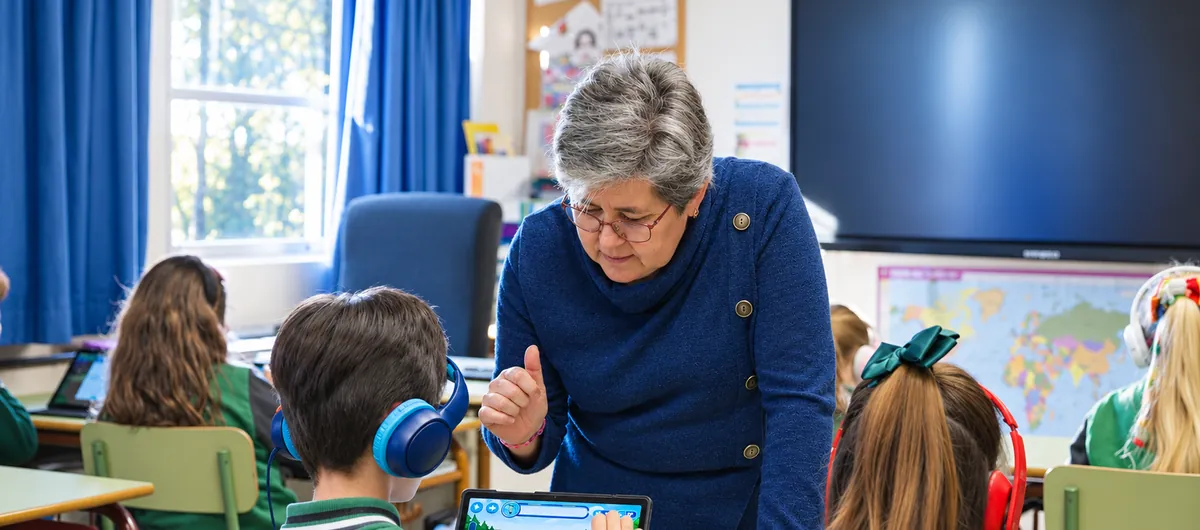
for all students, with and without reading and writing difficulties

Easy to implement

short sessions, automatic reports, and use both in class and at home.
What is Dytective

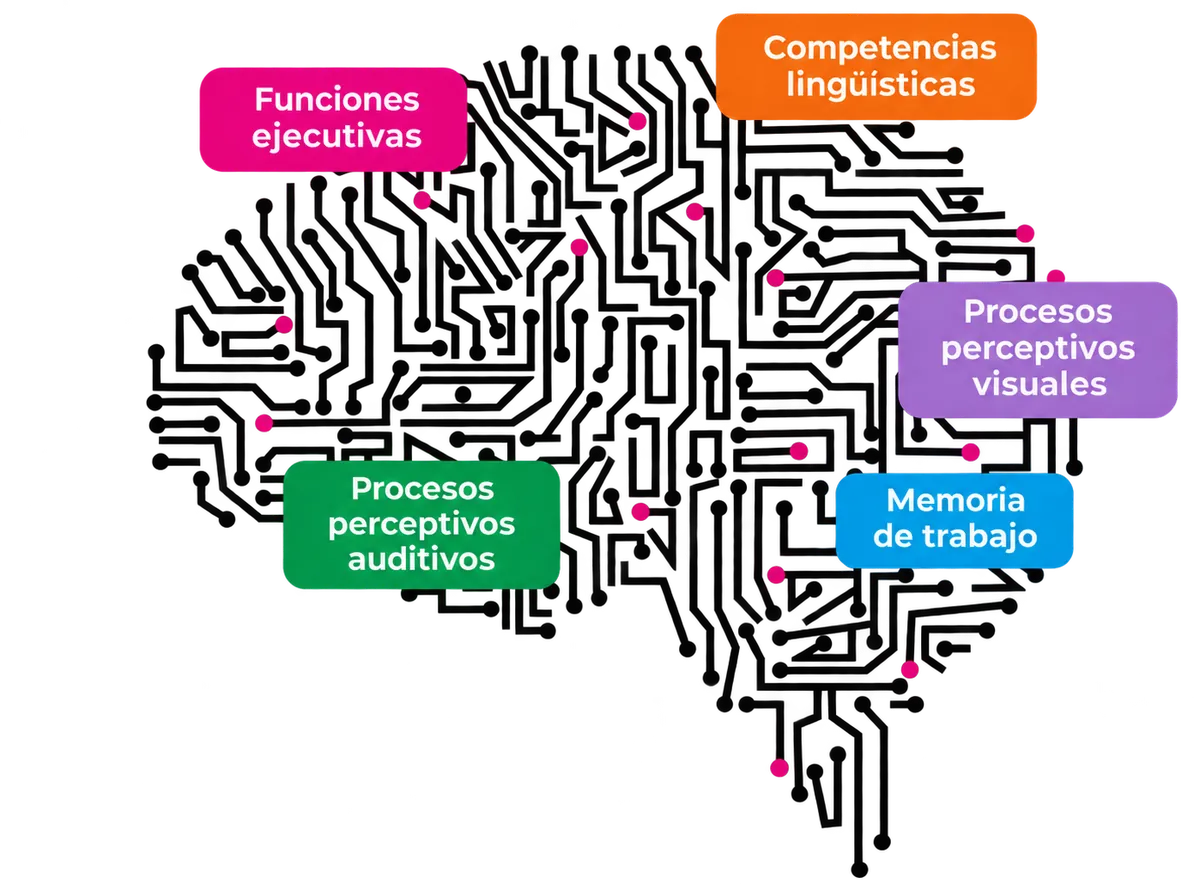
The areas Dytective works on: executive functions, language skills, visual and auditory perceptual processes, and working memory

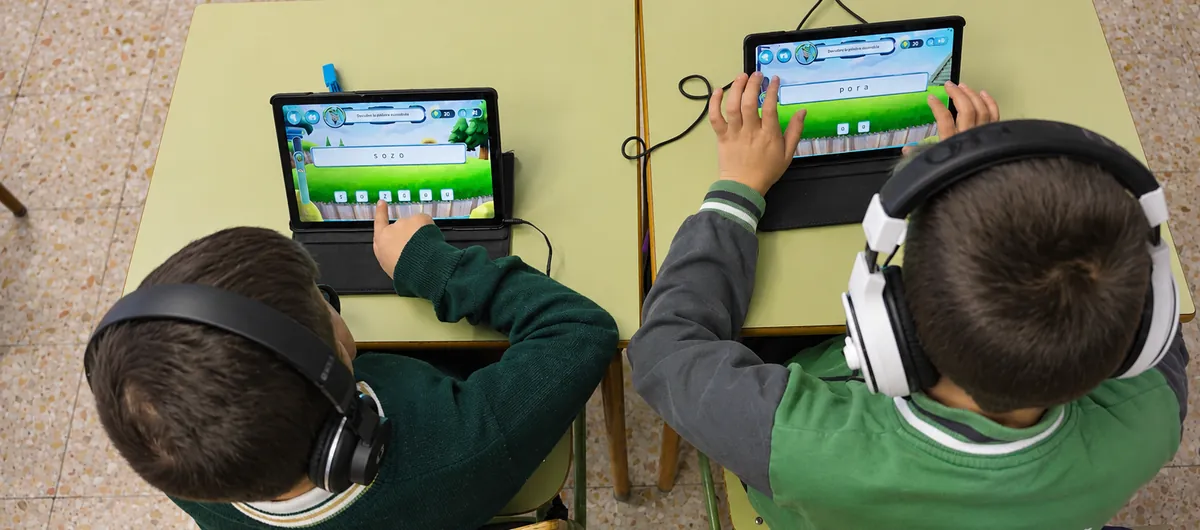
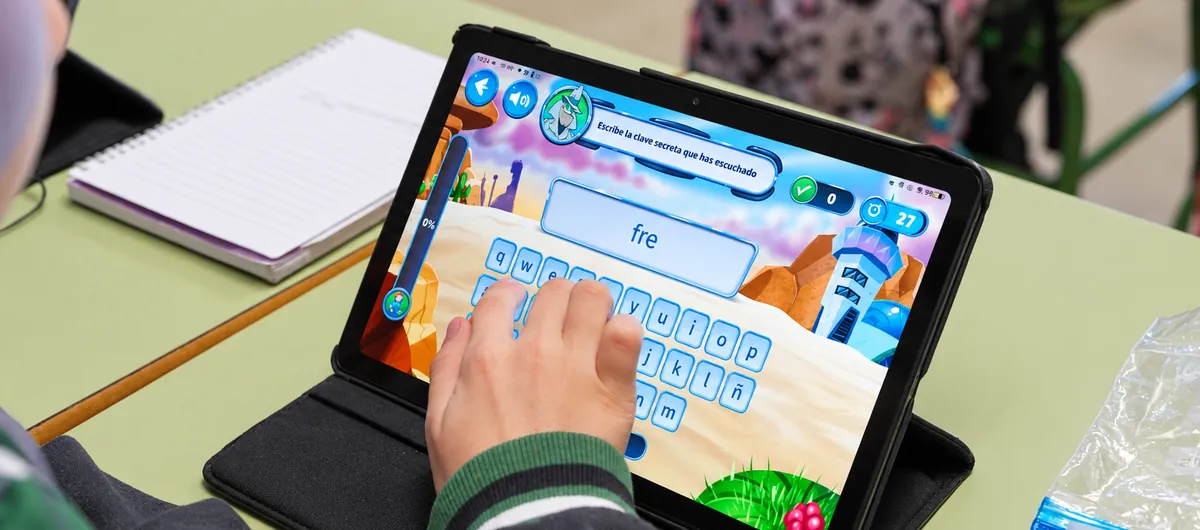
Dytective is a digital stimulation tool based on an adaptive educational video game that involved in reading and writing.

The platform adapts the exercises to each student’s level and provides automatic reports to make monitoring and educational intervention easier.

Watch the demo

Testimonial videos from educators and families like you

See videos on Instagram

In detail

The 24 cognitive skills Dytective works on

Dytective personalises more than 42,000 activities according to each student’s profile and trains 24 cognitive skills that are essential for developing reading, writing and learning. These skills are organised into five broad areas, each related to abilities that children use every day, both at school and beyond.

1. Performance

These skills help children read more fluently, write with fewer errors and understand texts better, making learning easier in every subject.

  • Reading comprehension
  • Reading speed
  • Natural spelling
  • Arbitrary spelling
  • Writing speed
  • Error recognition
  • Error correction

2. Language skills

They make it possible to recognise sounds, syllables, words and language structures. They are the basis for learning to read and write correctly, broadening vocabulary and communicating effectively.

  • Alphabetic skills
  • Phonic skills (phonological awareness)
  • Syllabic skills
  • Lexical skills
  • Morphological skills
  • Syntactic skills
  • Semantic skills
  • Spelling skills

3. Working memory

It supports the ability to hold and use information for a short period of time, which is essential for following instructions, understanding explanations, solving problems and doing schoolwork.

  • Visual memory
  • Visual sequential memory
  • Auditory memory
  • Auditory sequential memory

4. Perceptual processes

They help children correctly distinguish and classify sounds, letters, words and images, making reading, writing and making sense of their surroundings easier.

  • Visual discrimination and categorisation
  • Auditory discrimination and categorisation

5. Executive functions

They strengthen the ability to stay focused, pick out the important information and juggle several tasks, skills that are essential both in the classroom and in everyday life.

  • Sustained attention
  • Selective attention
  • Divided attention

Together, these 24 skills underpin many of children’s everyday activities: from reading a story, understanding an explanation or writing an essay to following instructions, solving problems, concentrating on a task or communicating effectively with others. Thanks to its adaptive system, Dytective identifies each student’s strengths and needs to offer personalised training that makes learning more effective, motivating and inclusive.

What does Dytective offer your school?

A flexible, evidence-based solution to support the development of reading and writing in every student

Learning based on scientific evidence

Quality content, backed by research

More than 42,000 gamified exercises.

24 cognitive skills related to reading and writing.

Solid scientific backing and real results. See all scientific publications →

A personalised experience

It adapts to each school’s circumstances and each student’s level

Automatic adaptation of the exercises to each student’s strengths and weaknesses.

Custom sessions so that teachers can choose by hand the skills and exercises they want to work on. See the tutorial →

Progress tracking

Useful information for more individualised support.

Continuous assessment of each student’s development.

Automatic reports that make monitoring and decision-making easier.

Flexible and accessible in and out of the classroom

Easy to roll out, both at school and at home

Free, unlimited access with 15-minute sessions.

Multi-device, multi-platform access: web, Android and iOS; on computer, tablet and phone

In detail

Types of report

Automatic reports that make monitoring and decision-making easier.

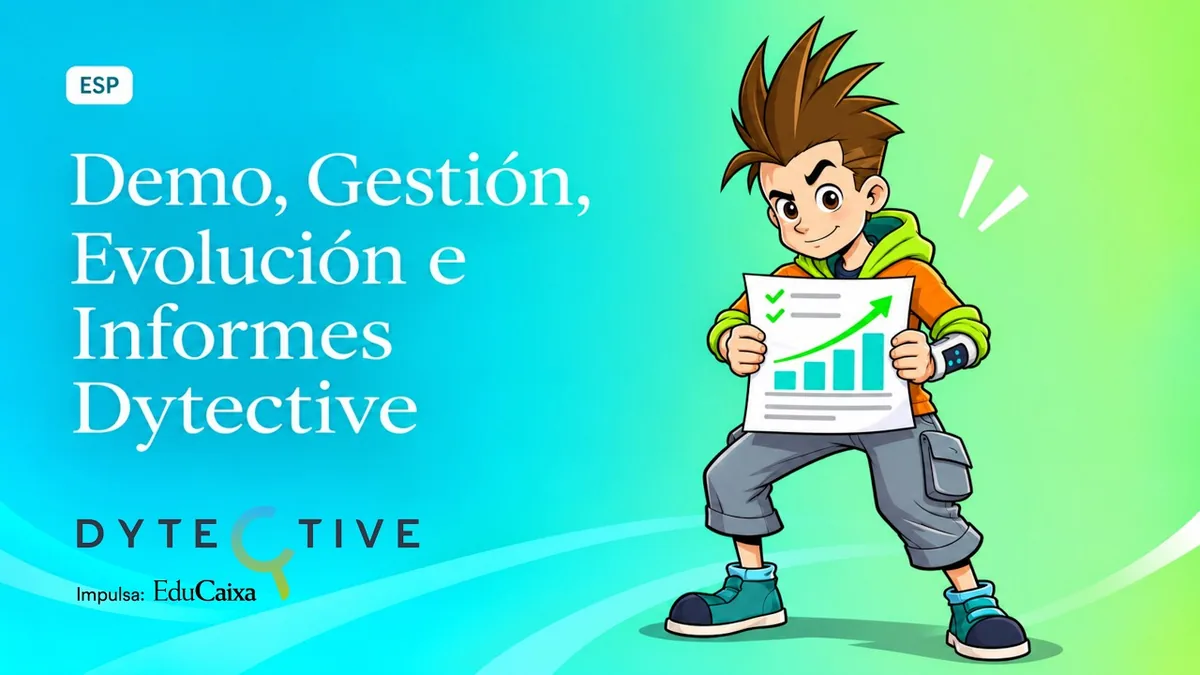
This report shows the student’s progress in the key skills for reading, writing and learning, including reading comprehension, spelling, attention, memory and language. This information helps families and educators tailor their support, build on strengths and make decisions that help the student progress in the face of the challenges of dyslexia.

Scientific backing

Solid scientific backing: more than a decade of research in collaboration with co-authors from Spanish and international universities, resulting in numerous scientific articles and a patent.


Research and scientific evidence: summary of results from key publications

  • London School of Economics and Political Science
  • University College London
  • Universidad de Sevilla
  • Universidad Rey Juan Carlos
  • IE University

Study 1: 13.406 students 100 schools

Study 2: 34.607 students 264 schools

Two studies were carried out in schools in the Community of Madrid, led by the London School of Economics, with samples of 13,406 students from 100 schools and 34,607 students from 264 schools respectively.

These studies found that:
  • Students at schools that used Dytective achieved better results in Spanish Language in the LOMCE standardised tests, with improvements equivalent to two to three additional months of learning.
  • Greater use of the platform is associated with greater progress in reading and writing skills, in line with the use of activities that are personalised and adapted to each student’s progress (positive correlation, not causation).
  • University of Exeter
  • Banco de España
  • IE University

Study: 527 students 10 schools in areas at risk of exclusion

A study was carried out in Chile with a sample of 527 students from schools in areas at risk of exclusion. It consisted of two Dytective challenges in the classroom three times a week, led by an educational psychologist who visited the school. The intervention was complemented by informative and motivational text messages to parents and a mobile library.

The following results were found:

  • An increase in students’ academic aspirations and self-confidence, accompanied by an apparent improvement in performance in Chile’s standardised National Language Test (coefficient of determination, not causation).
  • The improvements were seen both in children at risk of reading and writing difficulties and in those not at risk.
  • The results suggest that students at risk of reading and writing difficulties may benefit more, although the evidence is not conclusive owing to the small sample size.

Scientific and advisory board

Our Advisory Board is made up of renowned international scientists in fields such as computer science, linguistics, education, speech therapy and medicine, as well as leading figures in social entrepreneurship.

Scientific and Advisory Board

Dr. Ricardo Baeza-Yates

Bio

Ricardo Baeza-Yates is a part-time Full Professor at Universitat Pompeu Fabra in Barcelona, a part-time WASP Professor at KTH Royal Institute of Technology in Stockholm (Sweden) and a part-time Professor at the University of Chile. He is also Search Chief Scientist at You.com.

He holds a PhD in Computer Science from the University of Waterloo (Canada). His main areas of expertise include responsible artificial intelligence, information retrieval, web search, data mining, data science and algorithms.

From 2021 to early 2025 he was Director of Research at the Institute for Experiential AI at Northeastern University (United States). He was previously Chief Technology Officer (CTO) of NTENT, a company specialising in semantic search, from 2016 to 2020, and Vice President of Research at Yahoo Labs from 2006 to 2016, first in Barcelona and later in Sunnyvale (California).

He is co-author, with Berthier Ribeiro-Neto, of the book Modern Information Retrieval, published by Addison-Wesley in 1999, with a second edition in 2011. The book received the ASIS&T Best Information Science Book Award in 2012.

Throughout his career he has received numerous international honours for his contributions to research in algorithms and information retrieval, and for his role in strengthening the computer science community in Latin America. These include ACM Fellow (2009) and IEEE Fellow (2011), Spain’s Ángela Ruiz Robles Award (2018), Chile’s National Prize for Applied Sciences and Technology (2024) and the ACM Luiz André Barroso Award (2025).

Scientific and Advisory Board

Dr. Almudena Sevilla

Bio

Almudena Sevilla is Professor of Economic and Social Policy in the Department of Social Policy at the London School of Economics and Political Science (LSE), a Fellow of the Academy of Social Sciences and, since January 2025, a Commander of the Order of the British Empire (CBE), an honour awarded for her contributions to economics and her leadership in advancing women in the profession.

She is President of the Society of Economics of the Household, founder and Ambassador of the Royal Economic Society’s UK Women in Economics Network, and Director of the LSE Women in Social and Public Policy Research Hub. She is also a Research Fellow at IZA (Institute of Labor Economics) and CEPR (Centre for Economic Policy Research), and was Co-Director of the Centre for Time Use Research at UCL from 2018 to 2022. She previously held academic posts at University College London, Queen Mary University of London, the University of Oxford and the University of Essex, and worked at the US Congressional Budget Office in Washington D.C. She received her PhD in Economics from Brown University in 2004, specialising in family and population economics and econometrics.

Her research is published in leading academic journals such as the American Economic Review, the Journal of Labor Economics and the Journal of the European Economic Association, and covers gender inequality in the labour market, the motherhood penalty, the intergenerational transmission of gender norms and the economics of education. In the latter field, she took part in the evaluation of the Dytective programme with Pilar Cuevas-Ruiz, Luz Rello and Ismael Sanz. The results were published in 2021 in the study “Educational reinforcement measures in literacy: the case of the Dyslexia Aid programme in the Community of Madrid”, which analyses schools’ participation in the programme and its relationship with academic results.

Scientific and Advisory Board

Dr. Ismael Sanz Labrador

Bio

Professor of Applied Economics at Universidad Rey Juan Carlos and Director of the Economics of Education Area at FUNCAS. He is also a Visiting Professor at the London School of Economics and Political Science (LSE) and a member of the LSE Women in Social and Public Policy Research Hub. His work focuses on the economics of education, public economics and policy evaluation, with particular attention to the analysis of educational outcomes and the design of evidence-based policies.

He holds a PhD in Applied Economics from Universidad Complutense de Madrid and received the Outstanding Doctoral Thesis Award in 2007. Throughout his career he has combined academic research with senior responsibilities in education policy: he was Director of the Instituto Nacional de Evaluación Educativa at the Ministerio de Educación, Cultura y Deporte from 2012 to 2015, Director General of Innovation, Scholarships and Grants of the Comunidad de Madrid from 2015 to 2019, and Chair of the OECD PISA Strategic Development Group from 2014 to 2015.

He has undertaken research visits and further study at international institutions such as the University of California, Santa Barbara, Victoria University of Wellington, the New Zealand Treasury, the University of Otago, the Australian National University, Harvard’s Kennedy School of Government and the University of Nottingham. His scientific output includes publications in international journals such as The Economic Journal, the Oxford Bulletin of Economics and Statistics, the Scandinavian Journal of Economics, the Canadian Journal of Economics, the European Journal of Political Economy, Public Choice and the IZA Journal of Labour Studies.

His profile combines academic rigour, institutional experience and first-hand knowledge of educational assessment systems, making him a leading figure in the economic analysis of education and public policy.

Scientific and Advisory Board

Dr. Nancy Cushen White

Bio

Nancy Cushen White, Ed.D., is a Clinical Professor in the Department of Pediatrics–Adolescent and Young Adult Medicine at the University of California, San Francisco (UCSF), and is a member of the UCSF Dyslexia Research Center team.

She has taught in general and special education classrooms in public and private schools, carried out psychoeducational assessments and reading and writing interventions, trained pre-service and in-service teachers, developed curricula and taken part in education policy initiatives.

She pioneered the creation of a special San Francisco Unified School District class for 2e —Twice Exceptional— students (gifted students with dyslexia). She has also taught young adults in a pre-trial diversion programme through the San Francisco Superior Court — Mentor Court Division; worked for 10 years as a literacy intervention consultant and case manager at the Lexicon Reading Center (Dubai, United Arab Emirates); and trains teachers in the Slingerland Multisensory Structured Language Approach (Structured Literacy) as a certified instructor for the Slingerland Literacy Institute.

She has received numerous awards from institutions such as:

UC Berkeley Extension (2002 — Honored Instructor Award)
International Dyslexia Association (IDA, 2007 — Margaret Byrd Rawson Lifetime Achievement Award)
International Multisensory Structured Language Education Council (IMSLEC, 2014 — Etoile DuBard Award of Excellence)
Academic Language Therapy Association (ALTA, 2016 — Dr. Luke Waites Award of Service)
Northern California Branch of the International Dyslexia Association (IDA-NorCal, 2019 — Recognition of Extraordinary Leadership and Accomplishment)
International Dyslexia Association (IDA, 2023 — Inaugural Distinction of Service Award).

She continues to publish and lead workshops. For nine years she was editor-in-chief of The Examiner, the International Dyslexia Association’s online publication, and she now sits on the editorial board of Perspectives on Language and Literacy. She also serves on various boards and advisory committees, including:

National Joint Committee on Learning Disabilities (NJCLD, as IDA representative)
Northern California Branch of the International Dyslexia Association
California State Literacy Team
the California Senate Bill 488 (SB 488) Literacy Workgroup of the California Commission on Teacher Credentialing.

Scientific and Advisory Board

Dr. Jeffrey P. Bigham

Bio

Jeffrey P. Bigham is an Associate Professor in the Human-Computer Interaction Institute and the Language Technologies Institute in the School of Computer Science at Carnegie Mellon University. His research focuses on developing human-centred interactive artificial intelligence systems that work reliably in real-world settings. He works at the intersection of machine learning and human-computer interaction to create systems that are more useful, adaptable and aligned with human needs. His interests include responsible AI, contextual reasoning and collaborative intelligence.

In addition to his work at Carnegie Mellon, he is Director of Human-Centered Machine Intelligence & Responsible AI within Apple’s Machine Learning Research organisation, where he leads research and applied work in AI and machine learning design, system behaviour, accessibility technologies, learning sciences and the computational understanding of user interfaces.

He earned his B.S.E. in Computer Science from Princeton University and his PhD in Computer Science and Engineering from the University of Washington, under the supervision of Richard E. Ladner. His honours include the Alfred P. Sloan Foundation Fellowship, the National Science Foundation CAREER Award and the MIT Technology Review TR35 Award. Before joining Carnegie Mellon, he was a professor at the University of Rochester, where he led the ROC HCI Group.

Scientific and Advisory Board

Dr. Miquel Serra Raventós

Bio

Miquel Serra Raventós is Emeritus Professor of Basic Psychology at the Universitat de Barcelona (UB), specialising in language development and acquisition and in language disorders. Over a career of more than forty years he has combined research, teaching and speech therapy practice.

He has built an extensive academic career combining clinical work, the management of university services and participation in international bodies. He has been a member of the executive committee of the International Association for the Study of Child Language and director of the External Speech Therapy Service of the Universitat de Barcelona, as well as of its master’s degree in Speech Therapy.

He is the author and co-author of books and scientific articles on psycholinguistics and on language acquisition and disorders. His works include A-RE-HA. Análisis del retraso del habla and La adquisición del lenguaje, which address the assessment of children’s speech and the processes of language acquisition and development.

In September 2022 he was made an honorary member of the Association for the Study of Language Acquisition (AEAL) at its 10th International Congress, held in Girona.

Scientific and Advisory Board

Dr. Rosa Bosch

Bio

Dr. Rosa Bosch is a psychologist and holds a PhD in Psychiatry from the Universitat Autònoma de Barcelona. She is a researcher at the Institut de Recerca Sant Joan de Déu and in the Research Group on Innovation in Mental Health and Emotional Well-being (ISaMBeS) of the Institut de Recerca i Innovació en Ciències de la Vida i de la Salut de la Catalunya Central (IRIS-CC). She currently coordinates the SJD MIND Schools Programme at Sant Joan de Déu and the research activities of the Mental Health Division of Althaia Xarxa Assistencial Universitària de Manresa.

She has a solid track record in biomedical research, which began in 2001 at the Hospital Universitari Vall d’Hebron. Her early work focused on the clinical and aetiopathogenic study of various neuropsychiatric disorders, with particular emphasis on attention deficit hyperactivity disorder (ADHD) and its associated comorbidities. In recent years, her research has expanded considerably towards neurodevelopmental disorders, covering both clinical analysis and the exploration of their genetic bases. She has also studied in depth the impact of these disorders on the quality of life of children, adolescents and adults, contributing to a better understanding of the factors that influence the well-being of these populations.

She has 25 years of experience and a substantial scientific output, backed by more than 85 peer-reviewed scientific publications, 25 of them published in the last five years. Her work has received 4,210 citations and she has an h-index of 35.

Dr. Bosch’s scientific career has contributed significantly to advancing knowledge of the clinical, symptomatic and assessment aspects of neurodevelopmental disorders (NDDs), especially ADHD, learning disorders and autism, as well as their comorbidities. It has also made it possible to identify the genetic bases of these disorders and to improve understanding of the risk factors that adversely affect academic performance and other key areas of personal functioning. Her research has spanned the entire life cycle — from childhood and adolescence to adulthood — highlighting how these disorders affect each age group in a unique and specific way. This comprehensive approach has been essential in developing personalised strategies for diagnosis, treatment and support, thereby improving the quality of life of those affected.

Dr. Bosch is a member of highly relevant national and international scientific networks, such as the Global Child and Adolescent Mental Health Study (GCAMHS), the Psychiatric Genomics Consortium (PGC), the International Multicenter persistent ADHD Collaboration (IMpACT) and the EArly Genetics and Lifecourse Epidemiology (EAGLE) consortium. She also takes part in established research structures, such as groups G27 (until 2021) and G11 (currently) of the Centro de Investigación Biomédica en Red de Salud Mental (CIBERSAM). In addition, she has supervised undergraduate dissertations in Medicine and is currently supervising three doctoral theses, reflecting her firm commitment to research and to training new professionals in the biomedical field.

Her research activity has gone hand in hand with the creation and implementation of clinical programmes needed for applied research at prestigious institutions such as the Hospital Universitari Vall d’Hebron and the Hospital Sant Joan de Déu. At the same time, she has maintained active collaborations with patient associations, schools, policymakers and the general public. These collaborations have been essential in promoting preventive measures and improving support for people affected by neurodevelopmental disorders.

In 2024 she received the Outstanding Doctorate Award from the Universitat Autònoma de Barcelona for the 2021–2022 academic year.

Scientific and Advisory Board

Dr. Joaquim Llisterri

Bio

Joaquim Llisterri received his PhD in Romance Philology from the Universitat Autònoma de Barcelona (UAB) in 1987 and has been a Senior Lecturer in General Linguistics at the same university since 1989. He has taught undergraduate and postgraduate courses on general and applied linguistics, general and applied phonetics, speech technologies and spoken corpora.

His research, publications and participation in national and international projects have focused on the application of experimental phonetics to speech technologies — particularly in the field of text-to-speech conversion — and on the characterisation of phonetic interference in second and third language acquisition. He has also worked on the evaluation of synthesised speech, the compilation and annotation of spoken corpora — particularly in the area of prosody — and the analysis of disfluencies in spontaneous speech, as well as on the use of information and communication technologies in language teaching and linguistic research.

He has taken part in the European projects SAM-A (1991-93), MULTEXT (1994-96), SpeechDat (1994-95), MATE (1998-99), NITE (2001-03), EAGLES (1993-96), ISLE (2000-01), EUROMAP I-II (1996-99) and HOPE (2000-03), and has been responsible for research and development agreements between the UAB and Telefónica I+D (1993-99), CNET (1993-96), CSELT (1998-2000), Loquendo (2001-03) and Natural Vox (2007). He has also been principal investigator of three national projects on inter- and intra-speaker variation in the context of forensic phonetics (VILE, 2001-04; VILEP, 2011-13; ESTIVOZ, 2015-17).

From 1990 to 1994 he headed the Department of Spanish Philology at the UAB and from 2003 to 2006 he coordinated the Computing and Humanities programme of the Faculty of Philosophy and Arts; he was also Academic Secretary and Vice-Dean for University Outreach of the Faculty of Translation and Interpreting at the UAB (2007-08). From 1996 to 1999 he was Academic Deputy Director of the Instituto Cervantes, where he was also responsible for the activities of the Observatorio Español de Industrias de la Lengua.

From 2003 to 2005 he directed the Curso de Tecnologías Lingüísticas of the Fundación Duques de Soria and from 2008 to 2016 he chaired the Scientific Advisory Committee of the Official Postgraduate Programme in Phonic Studies organised by the Consejo Superior de Investigaciones Científicas and the Universidad Internacional Menéndez Pelayo.

Scientific and Advisory Board

Dr. Enrique Romero

Bio

Enrique Romero Merino is a professor at the Universitat Politècnica de Catalunya (UPC), in the Departament de Ciències de la Computació (formerly Llenguatges i Sistemes Informàtics). He is a member of the Soft Computing Research Group at the UPC’s Intelligent Data Science and Artificial Intelligence Research Center (IDEAI). He also collaborates with the scientific team at Change Dyslexia, an initiative focused on the detection and treatment of dyslexia using a range of technologies.

With more than thirty years devoted to research and teaching, his work has resulted in numerous collaborations and publications at leading conferences and in leading journals.

Enrique Romero is a researcher who combines theory and practical application, integrating Artificial Intelligence, Data Science and Machine Learning with an approach clearly focused on social and educational impact. His involvement in research networks and learning accessibility platforms makes him a leading figure in the field at his institution and in educational technology.

Scientific and Advisory Board

Antonella Broglia

Bio

Born in Modena, Italy, she devoted the first part of her career to advertising communication, becoming CEO of the Ogilvy & Mather communications agency in Rome and CEO and Vice President of the Saatchi & Saatchi España communications agency from 1999 to 2006.

Over the last 20 years, she has brought her communications experience to the field of social, cultural and civic innovation.

She organised and hosted the TEDxMadrid conferences for 8 years, was TEDx Ambassador for Europe for 7 years, curated a TEDx event in the UK, and has curated 4 TED Talks on ted.com, all with more than a million views.

She explores innovation from different angles: social entrepreneurship, through the Ashoka platform, of which she has been an ambassador for 18 years and for which she designs and hosts all public events in Spain and other countries; corporate social innovation, through a similarly long collaboration with Fundación SERES, which brings together the social action of the country’s 150 leading companies and for which she has hosted and designed all public events; educational innovation with the Princess of Girona Foundation, whose honorary president is the Princess of Asturias and Girona, for which she hosts events and trains young speakers; civic and neighbourhood innovation through her long collaboration with Medialab Prado, an institution of Madrid City Council, for which she hosted public events for 7 years; and political and public-sector innovation, through various collaborations, round tables and one-to-one training for political professionals. For 12 years she curated the social innovation section of the programme “Para todos La 2” on TVE’s La 2.

Since 2020 she has led, together with Manuel Pascual of the Zuloark collective, the communication events of Compromiso con el Clima, with Madrid City Council as the main counterpart through its Subdirección General de Energía y Cambio Climático, alongside ITD UPM and the La Casa Encendida cultural centre.

Scientific and Advisory Board

Ana Sáenz de Miera

Bio

For 14 years she has held leadership positions at Ashoka, the world’s largest network of social entrepreneurs.

She is currently Ashoka’s Global Director of AI and of the Next Now programme. She is an independent director of MicroBank, a member of the BMW Foundation’s Responsible Leaders Network, and has featured for several years in the Top 100 Women Leaders in Spain.

Degree in Psychology from the UAM, a Master’s in Clinical Psychology and a Master’s in Humanities.

She is the mother of 4 daughters.

Scientific and Advisory Board

Dr. Sonia Alcalde

Bio

Dr. Sonia Alcalde holds a PhD in Education from the Universidad Autónoma de Madrid (UAM), awarded cum laude, a degree in Educational Psychology from the Universidad Complutense de Madrid and a master’s degree in Neuropsychology from the Universidad Internacional de La Rioja (UNIR), and has trained in Auditory-Verbal Therapy with Alexander Graham Bell (USA).

She has extensive experience in educational intervention with students with learning difficulties, hearing impairment, spoken and written language disorders and autism spectrum disorders, among others. She completed her specialist training at institutions including the Universidad de Alcalá de Henares, the Universidad Complutense de Madrid, the Universidad Internacional Menéndez Pelayo, the Universidad Internacional de La Rioja and the Universidad de Castilla-La Mancha, and has spoken at academic events at Spanish and international universities, including the Universidad Complutense de Madrid, the Universidad Autónoma de Madrid, the Universidad de Granada, the Universidad Nacional de San Antonio Abad del Cusco, the Spanish Audiology Association (Faculty of Medicine) and GICCA, the Ibero-American Congress on Cochlear Implants and Related Sciences.

She is a registered speech and language therapist with the Madrid Association of Speech Therapists, a court-appointed expert with the same association and a specialist court facilitator, accredited in connection with the Spanish Ministry of Justice and trained through the Madrid Bar Association. Her work in this field helps to promote accessibility and equal opportunities for people with disabilities in court proceedings.

Her career includes a professional connection with the habilitative and rehabilitative approach of Auditory-Verbal Therapy through the Alexander Graham Bell Association for the Deaf and Hard of Hearing (AG Bell), a leading international organisation in hearing loss and spoken language development. She was the first Spanish-speaking presenter, with simultaneous interpretation, in the entire history of AG Bell, in recognition of the importance and relevance of her research on children and adolescents with hearing loss.

Her experience covers educational research, hearing and language rehabilitation, advice on inclusive education and teacher training. She also holds training accredited by the Community of Madrid’s Directorate-General for Bilingualism and Quality of Education to mentor newly appointed civil-service teachers. She has also served as a technical adviser at the Madrid-Capital Territorial Area Directorate (Special Education) and at the Directorate-General for Human Resources of the Ministry of Education (Madrid).

Scientific and Advisory Board

Dr. Miquel Casas

Bio

Dr. Miquel Casas has focused his career on the study and treatment of addictions, dual pathology, neurodevelopmental disorders and personality disorders across the life span. He graduated in Medicine and Surgery from the Universitat Autònoma de Barcelona in 1974, specialised in Psychiatry in 1978 and received his doctorate in Medicine from the same university in 1989.

He has been Head of the Addictive Behaviours Unit at the Hospital de la Santa Creu i Sant Pau in Barcelona; Head of the Psychiatry Department and Professor of Psychiatry at the Hospital Universitari Vall d’Hebron in Barcelona; head of the Psychiatry, Mental Health and Addictions Research Group at the Vall d’Hebron Institut de Recerca (VHIR); and director of the Institut Català de la Salut (ICS) corporate programme on neuropsychodevelopmental and learning disorders across the life span.

He has also been principal investigator of group G27 of the Centro de Investigación Biomédica en Red de Salud Mental (CIBERSAM) at the Instituto de Salud Carlos III in Madrid, a member of the Mental Health and Addictions Advisory Board of the Catalan Government’s Department of Health, and President of the Dual Pathology Foundation.

He is currently Honorary Professor of Psychiatry at the Universitat Autònoma de Barcelona and director of the SJD MIND Schools programme at the Hospital Sant Joan de Déu in Barcelona. He is also a member of the Public Health Advisory Board of the Catalan Government’s Department of Health, President of the Fundació d’Investigació Salut i Progrés (FISP) in Barcelona, Honorary President of the Spanish Society of Dual Pathology and an honorary member of the Royal Academy of Medicine of the Valencian Community.

He sits on the editorial boards of several psychiatry and addiction journals and has received a number of national and international awards and institutional honours.

Scientific and Advisory Board

Ángeles Álvarez-Cedrón

Bio

Ángeles Álvarez-Cedrón holds degrees in Speech Therapy and Teaching from the Universidad Autónoma de Madrid (UAM) and a master’s degree in Psychomotricity from ISEC Seville. She has more than 35 years of experience in education and clinical practice, specialising in oral and written language acquisition and development, learning difficulties and speech therapy intervention.

Throughout her career she has worked for public and private institutions, including the Spanish National Organisation of the Blind (ONCE), Madrid City Council and a number of schools and clinical practices. She has developed intervention programmes for students with dyslexia, developmental language disorder (DLD), attention deficit hyperactivity disorder (ADHD), stuttering, hearing impairment and autism spectrum disorder (ASD), and provides specialist training for teachers and families.

In 2015 she designed and launched a school speech therapy project at Colegio Sagrado Corazón in Madrid, which brings prevention and intervention programmes for oral and written language difficulties into the school itself, giving students access to specialist, personalised support.

Her career combines clinical practice, educational intervention and teacher training, with a particular interest in developing tools and methods that adapt teaching to each student’s individual needs.

The Dytective community

1 in 4 schools is already part of the Dytective community Be part of the change!

Free and unlimited thanks to the support of the ”⁠la Caixa” Foundation, through EduCaixa

Also open to social organisations based in Spain, thanks to the support of the ”⁠la Caixa” Foundation through CaixaProinfancia

Percentage of schools in each province registered with Dytective Araba/Álava: 29.1% Albacete: 38.6% Alacant/Alicante: 38.2% Almería: 24.5% Ávila: 25.8% Badajoz: 19.1% Illes Balears: 34.2% Barcelona: 32.9% Burgos: 51.6% Cáceres: 16.8% Cádiz: 18.7% Castelló/Castellón: 37.5% Ciudad Real: 37.6% Córdoba: 17.8% A Coruña: 20.9% Cuenca: 23.0% Girona: 34.6% Granada: 21.3% Guadalajara: 33.8% Gipuzkoa/Guipúzcoa: 27.9% Huelva: 22.4% Huesca: 31.7% Jaén: 16.5% León: 20.0% Lleida: 37.0% La Rioja: 40.1% Lugo: 25.9% Madrid: 55.9% Málaga: 26.1% Murcia: 43.0% Navarra: 24.4% Ourense: 20.9% Asturias: 22.8% Palencia: 27.4% Las Palmas: 10.6% Pontevedra: 22.2% Salamanca: 19.2% Santa Cruz De Tenerife: 12.0% Cantabria: 35.3% Segovia: 21.1% Sevilla: 23.6% Soria: 31.7% Tarragona: 35.0% Teruel: 34.1% Toledo: 27.8% València/Valencia: 42.0% Valladolid: 29.9% Bizkaia/Vizcaya: 30.6% Zamora: 14.8% Zaragoza: 44.6% Ceuta: 22.6% Melilla: 12.0%
Percentage of schools in each province registered with Dytective. Figures as of 23 November 2026.

How to get started

  1. Create a free account for your school or organisation

    Log in → Create an account with your email.

  2. Choose the account type

    Choose schools and confirm your account with the link we send to your email.

  3. Add your students and give them their login details so they can get in

    We support you through the process so you can learn to use Dytective in our online meetings.

    Sign up for the online meetings

We use essential cookies to make the website and the customer dashboard work and, only if you accept them, analytics cookies to understand how they are used and improve them. Cookie policy
About cookies

Essential cookies make the website and the dashboard work: for example, they remember your session and your answer to this notice. Analytics cookies, only if you accept them, tell us in aggregate how the public website and the customer dashboard are used so we can improve them.

You can change your mind at any time from «Cookie settings», at the bottom of every page.